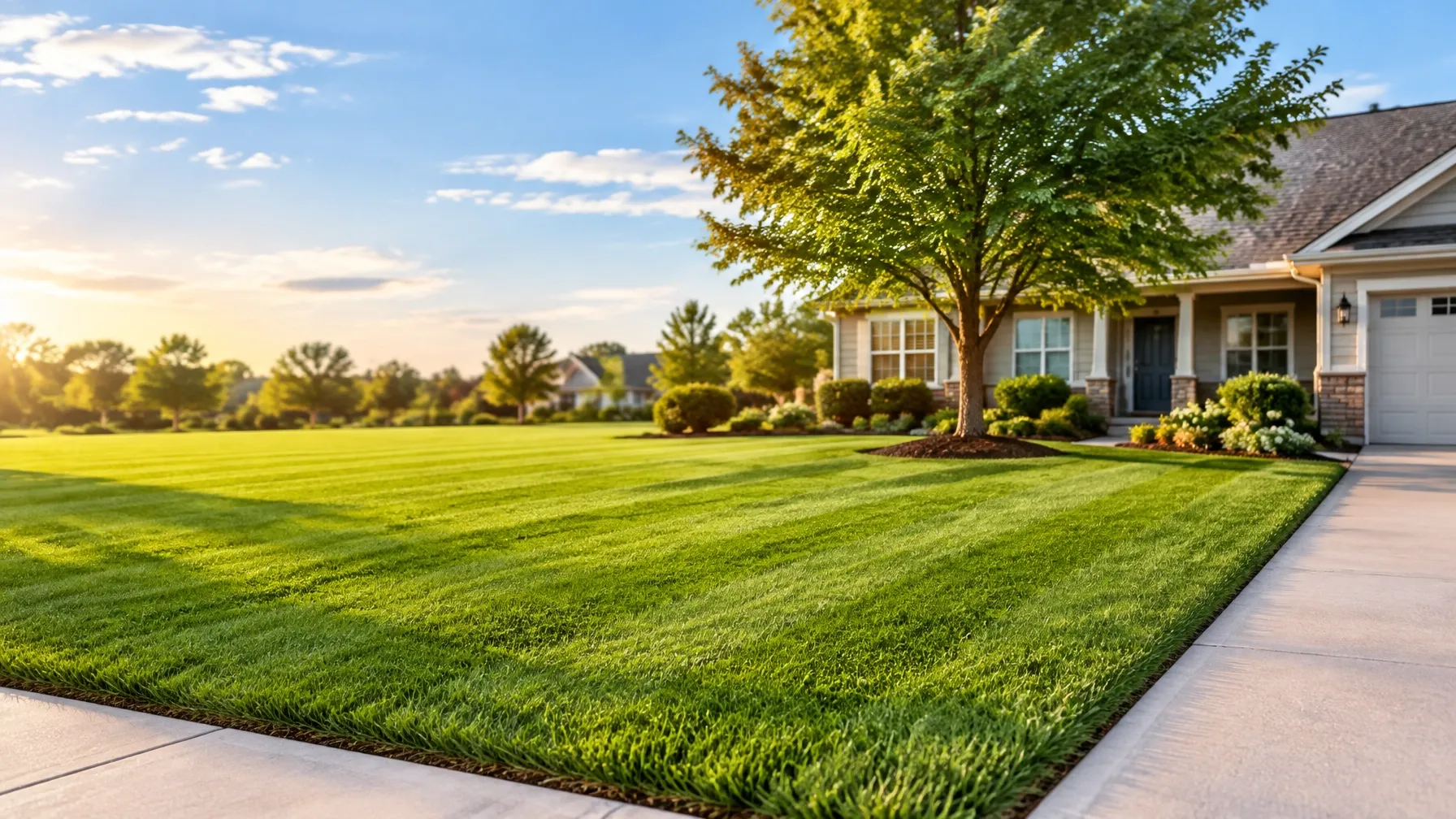
Weekly vs. Biweekly Mowing: Which Schedule Is Better for Your Lorain County Lawn?

If you are deciding between weekly and biweekly mowing, the right schedule depends on how quickly your grass is growing, how your property is used, and what appearance standards you need to meet.
This question comes up often in late summer and fall. Grass growth changes as temperatures and rainfall change. A schedule that works in July may not be the best choice in April or early fall.
JHD Lawn Care LLC provides both weekly mowing service and biweekly mowing throughout Elyria and Lorain County. The goal is simple: choose a schedule that keeps your property clean, manageable, and within your needs.
Weekly mowing for consistent results
Weekly mowing is the most dependable choice during active growing periods.
Cool-season grasses commonly found in Northern Ohio can grow quickly in spring and early fall. Regular mowing keeps the grass from becoming too tall between visits. It also supports a cleaner cut, lighter clippings, and a more consistent appearance.
Weekly service is often a good fit for:
- Residential lawns near sidewalks and roads
- Properties with visible front yards
- Fertilized or irrigated lawns
- Homes with active spring growth
- Businesses and storefronts
- Churches, offices, and rental properties
- HOA entrances and shared green spaces
- Customers who want a consistent weekly appearance
A weekly visit usually includes mowing, trimming, and clean edging around sidewalks, driveways, buildings, landscape beds, and property borders.
For many customers searching for a lawn mowing service near me, weekly mowing provides the simplest routine. The service day is established in advance, and the property receives regular attention without waiting for the grass to become overgrown.
Learn more about residential lawn care.

Biweekly mowing for slower growth
Biweekly mowing means service about every two weeks. It can be a practical option when the grass is growing more slowly and the property does not need a weekly finish.
Biweekly service may work well for:
- Large properties with lower-visibility areas
- Acreage and open grounds
- Shaded lawns
- Lawns that are not heavily watered or fertilized
- Rental properties with moderate appearance needs
- Customers working within a set maintenance budget
- Late fall, once grass growth has clearly slowed
Biweekly mowing is not automatically the right choice for every lawn. If the grass becomes too tall between visits, the next service may require additional mowing time, heavier trimming, or extra cleanup.
The basic rule is practical: if the grass is growing beyond a manageable height before the next visit, the property may need weekly service instead.
JHD reviews the property before confirming an estimate. Lawn size, condition, access, trimming needs, and the amount of work between visits all affect the service plan.
Why weekly matters in spring and peak growth
Spring is usually one of the fastest-growing periods for cool-season grass. Rainfall and mild temperatures can cause the lawn to grow quickly from one week to the next.
Waiting two weeks during this period can create several problems:
- Taller grass that is harder to cut evenly
- Heavy clippings after mowing
- Uneven areas around buildings and fences
- More trimming along sidewalks and landscape beds
- A greater chance of scalping the lawn when too much height is removed at once
- A less consistent appearance between visits
Weekly mowing helps avoid these issues. The mower removes less grass during each visit, which supports a cleaner result.
The same consideration applies in early fall. Cooler temperatures and regular rainfall can produce another period of active growth before the season begins to slow down. A lawn that was comfortable on a biweekly schedule in midsummer may need weekly service again in September.
Fall schedules may need to change
Fall does not always mean it is time to immediately reduce mowing frequency.
In early fall, grass may still be growing actively. Weekly mowing can help keep the property neat while the lawn continues to respond to cooler weather and rainfall.
Later in the season, growth often slows. At that point, some properties can move to biweekly or as-needed mowing. The timing depends on the lawn, weather, shade, property size, and current route schedule.
Leaf season also affects the overall property plan. Mowing and seasonal cleanup are separate needs, but they may be scheduled close together. A lawn may need continued mowing while leaves are beginning to fall. Later, the priority may shift toward leaf blowing, flower bed cleanup, and removal of yard debris.
For those services, see JHD Lawn Care’s fall cleanup service.
How pricing actually works
Weekly and biweekly mowing are priced based on the property and the work required. There is no single price that applies to every Lorain County lawn.
The estimate may consider:
- Lawn size
- Property layout
- Grass height and condition
- Slopes or difficult areas
- Amount of trimming and edging
- Access to the property
- Number of buildings or landscape beds
- Whether the property is residential, commercial, an HOA, or acreage
- How much growth is expected between visits
A weekly plan generally has a lower cost per visit because the lawn is maintained more regularly. Each visit usually involves less overgrown grass and less cleanup.
A biweekly plan has fewer visits each month, so the total monthly cost may be lower. However, each visit may require more time because the grass has had longer to grow. The per-visit price may be different from a weekly cut for that reason.
The best comparison is not only the price per visit. Consider the total monthly cost, the expected appearance, and whether the schedule fits the property.
JHD provides a free estimate based on your property and needs. The estimate explains the recommended service frequency and pricing before work is approved.
Request a free lawn-care estimate.

HOA expectations and shared properties
HOA requirements vary by community. Some associations have specific grass-height rules, appearance standards, or notices for properties that appear overgrown.
Weekly mowing is usually easier to manage when:
- The property has a visible front lawn
- The HOA expects a consistently maintained appearance
- The grass grows quickly in spring or early fall
- Several homes or common areas need the same service day
- The property manager wants a predictable maintenance routine
Biweekly mowing may be suitable for certain HOA areas when growth is slower and the association allows more time between visits. It is important to review your HOA’s specific requirements before choosing a schedule.
JHD provides HOA lawn care for entrances, shared green spaces, common areas, and community grounds. Service can be planned around the property’s layout and maintenance needs.
For commercial properties and shared grounds, view commercial lawn care services.
Compare and choose
Choose weekly mowing if:
- You want a consistent appearance each week
- The lawn grows quickly
- The property is in an HOA
- Your home or business has a visible frontage
- You fertilize or irrigate the lawn
- You want less grass between visits
- The property needs regular trimming and edging
Choose biweekly mowing if:
- Grass growth is currently slow
- The property is large or has open acreage
- Some areas are shaded or lightly used
- The appearance standard is more flexible
- You prefer fewer scheduled visits
- You are trying to manage the maintenance budget
- The lawn remains manageable for two weeks
Switch schedules when:
- Grass is too tall before the next visit
- Clippings are heavy after mowing
- Spring growth increases
- Cooler weather causes early fall growth
- The property receives more rain or irrigation
- HOA or property appearance requirements change
- Leaf season changes the type of service needed
The schedule does not have to remain the same all year. Many properties use weekly mowing during spring and peak growth, then move to biweekly service when growth slows.
A simple service process
JHD keeps the process straightforward:
Tell us what you need.
Provide the property address, property type, mowing preference, and any details about the lawn.Receive a property-based estimate.
JHD reviews the size, condition, and work required before confirming pricing.Choose your schedule.
Select weekly, biweekly, seasonal, one-time, or another available option based on your property.Confirm the service.
Contracts are available but never required. The final price and schedule are confirmed with you before work proceeds.
You can request an estimate and preferred service day through the JHD Customer App without downloading an app. The online request is designed to make the process easier and keep your service preferences clear.
Tell us which schedule fits your lawn
There is no single mowing schedule that works for every lawn in Lorain County. Weekly service is usually the better choice during fast growth and for properties with higher appearance expectations. Biweekly service can be a good fit when growth is slow, the property is larger, or fewer visits better match your needs.
JHD Lawn Care LLC serves Elyria, Lorain, Amherst, Sheffield Lake, Avon, Avon Lake, North Ridgeville, Oberlin, South Amherst, LaGrange, Grafton, Columbia Station, and nearby Lorain County communities.
Request a free estimate and include your preferred service day. You can also call 440-822-8476 or text 440-610-3265 to discuss weekly and biweekly mowing options.